
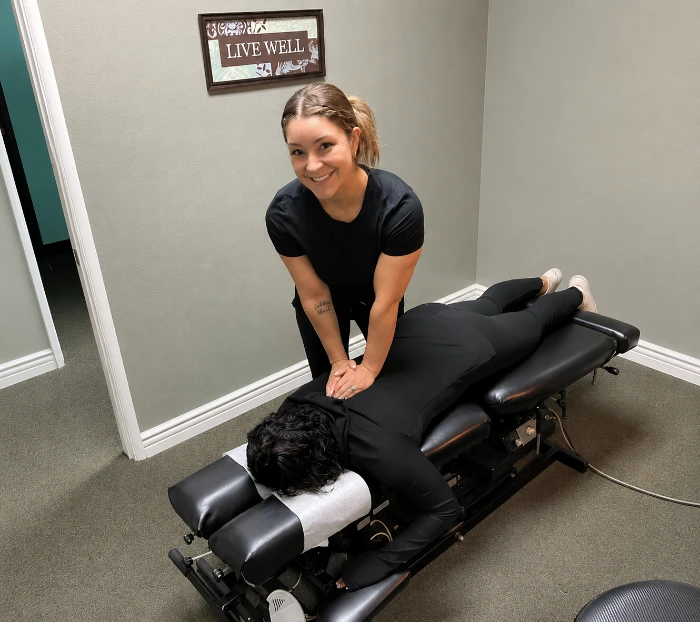
Spinal Adjustment in lake forest, CA
Adjustments, or manipulations as they’re sometimes referred to, are minor movements of the vertebrae in the spine. The objective of this movement is to realign vertebrae that have moved out of place for a number of reasons, ranging from normal daily activity to trauma such as a car accident.
When these vertebrae are out of place, it has an overall systemic effect from muscular to the central nervous system. Without proper alignment and flow of all nerves and systems in the body from the brain, we can’t function at our peak.
Dr. Ron Merriel, DC, and Dr. Jordan Ziegler, DC, offer spinal adjustments that are gentle, individualized, and tailored to your unique needs.
All procedures are initiated only after a thorough assessment at Go Greenlight Chiropractic.
What are Spinal Adjustments?
An adjustment is often a pressure from the chiropractor utilizing the hands or an instrument to move a vertebra back into place. This happens with a quick movement and is often without discomfort. You may hear a noise that sounds like you’re cracking your knuckles referred to as joint cavitation. It is the release of gases such as oxygen and nitrogen from the joint.
Overall, adjustments are an excellent way to keep the body functioning at its highest level. When the body is in alignment, it is able to respond and perform as it was designed to.
What to Expect During Spinal Adjustments
Most adjustments from our chiropractor Spring Valley CA team are hands-on, with Dr. Merriel primarily using manual, diversified adjustments and a gentle approach. He does not use forceful adjustments unless the situation calls for it. Dr. Jordan also primarily uses diversified adjustments and adapts the type and intensity based on how the patient is responding.
On a first visit, the adjustment is conservative and based on the patient’s pain levels that day. At the second visit, after reviewing exam results and X-rays, the adjustment is stepped up a little, either by adjusting more sections of the spine or by changing the technique based on how the patient responded.
For patients who are uncomfortable with the sounds of manual adjustments or nervous about having their neck adjusted, instrument-based options are available. Dr. Merriel uses the Arthrostim and the Activator as alternatives. Dr. Jordan uses the Activator as well and uses it most often with younger patients and kids.
How Do We Diagnose Spinal Misalignments
In order for us to diagnose your problems, we will first begin with a consultation where we try to understand your daily lifestyle, what you do at work, at home, and if you have had any past accidents or injuries.
After the consultation, a full physical examination is done. This includes orthopedic tests to identify the area involved and narrow down the cause. Our chiropractors assess range of motion to see how the patient is moving and whether they are favoring one side. Posture is also examined. Dr. Jordan uses a posture scan as a standard part of her exam.
Dr. Merriel will assess gait, how the patient walks into the room, whether they have trouble sitting down or getting up, and whether they can get on and off the table without difficulty.
Palpation is used to feel for areas in the spine that are restricted, in spasm, or not moving properly. For pediatric patients, palpation and motion assessment are the primary diagnostic tools since X-rays are not routinely used for kids.
Tools and Techniques We Use for Spinal Adjustments
We use several adjustment methods depending on the condition and the patient.
The drop table is used to adjust the hips and pelvis. Cox Flexion Distraction is used to decompress the spine and lower back, particularly for patients who sit for long periods and those with disc-related conditions.
For pregnant women, the positioning on the table is modified. Rather than lying face down, patients may be adjusted face up for the upper back or on their side for the lower back adjustment, depending on how far along the pregnancy is.
For kids, the treatment is very gentle. The younger the child, the more often the Activator method is used with only light force. Kids respond well to adjustments and tend to recover quickly.
Spinal Adjustment Patient Case Studies
Management of Neck Pain and Double Crush Nerve Injury
Patient: Woman, computer-based office worker
Symptoms: Neck pain, daily headaches, numbness and tingling down the arm and into the hand, wrist pain from prolonged mouse and keyboard use
Diagnosis: Double crush nerve injury. The nerve was being compressed in two places at once, at the neck and at the wrist.
Treatment: Spinal and wrist adjustments three times a week. Workstation ergonomics were corrected. Stretching was added along with icing several times a day to bring down inflammation. Strengthening exercises for neck posture were introduced in the second phase of care.
Outcome: By the end of the first month, pain was down by at least 50%, and numbness and tingling in the arm and hand had noticeably decreased. After about 24 to 30 visits, she had a full recovery with no pain, no headaches, and no numbness or tingling. She comes in for occasional check-ups and returned to all the activities she enjoys, including pickleball.
Recovery from Whiplash Using Chiropractic Adjustments
Patient: Adult male, rear-end collision with whiplash
Symptoms: Neck pain rated eight out of ten, headaches, numbness, and tingling into the fingers
Diagnosis: Whiplash was confirmed. An MRI of the cervical spine was ordered to determine whether a disc was causing nerve compression or whether residual muscle spasm and inflammation were responsible.
Treatment: Spinal adjustments following Dr. Merriel’s standard care plan. Soft tissue work alongside adjustments throughout the treatment period.
Outcome: After one month of care, neck pain came down to zero or one, and headaches resolved. Some numbness and tingling in the fingers remains. Treatment is ongoing, and significant improvement has already been made.
Low Back Pain and Sciatica Managed in an Elderly Adult
Patient: Older adult male who is active and does yard work
Symptoms: Low back pain and pain into the gluteal region after lifting heavy bags of mulch
Diagnosis: X-rays taken due to radiating pain into the glutes. Spinal subluxations identified. Contributing factor discovered mid-treatment: an unsupportive recliner that was re-straining the lower back every evening.
Treatment: Spinal adjustments with stretching and strengthening exercises. After three weeks with limited progress, Dr. Merriel reviewed the patient’s daily habits and identified the recliner as the obstacle. The patient switched to a supportive office chair at home, which allowed healing to progress.
Outcome: Full recovery. The patient was much more careful when choosing his next piece of furniture.
Resolving Neck and Back Pain From Years at a Desk Job
Patient: Adult male, works in tech, desk-based work
Symptoms: Neck and back pain, muscle tension, limited range of motion
Diagnosis: Spinal restrictions and subluxations related to prolonged desk work and poor ergonomics.
Treatment: Three times a week for six weeks, then twice a week for six weeks, then once a week for a month, then spaced out to once or twice a month for maintenance. Each in-office visit included intersegmental traction, vibratory massage, and diversified adjustments. Home exercises, stretches, and scheduled breaks during the workday were added.
Outcome: Range of motion improved almost immediately. Muscle tension came down over the following weeks. Pain during the day decreased, and he now finishes the day without pain.
Spinal Adjustment Patient Testimonials & Reviews












Book An Appointment
If you are experiencing symptoms requiring back pain treatment, neck pain, or nerve symptoms, spinal adjustments may help.
Frequently Asked Questions (FAQs)
What are spinal adjustments?
Spinal adjustments, also known as spinal manipulation, involve applying controlled force to affected vertebrae to improve its mobility, reduce pain, and restore proper spinal alignment.
Are spinal adjustments painful?
Most patients feel little to no discomfort. Some may experience mild soreness afterward, similar to exercise, which usually subsides within a day or two.
How long does it take to see the results of spinal adjustments?
The time it takes to see results from spinal adjustments can vary significantly from person to person. But many patients notice improvement after one or two sessions.
Are spinal adjustments safe?
Spinal adjustments are generally considered safe when performed by trained and licensed chiropractors, with serious complications being rare.
For which conditions are spinal adjustments done?
Spinal adjustments are commonly used to treat conditions such as:
- Chronic back pain
- Neck pain
- Headaches or migraines
- Sciatica
- Spinal misalignments (subluxations)
- Herniated or bulging discs
- Muscle tension and stiffness
- Postural problems
- Joint pain or discomfort
Do spinal adjustments help nerve pain?
By reducing joint restriction and pressure, adjustments may help improve nerve-related symptoms, such as sciatica treatment needs or arm pain.
When should you consider spinal adjustments?
If pain, stiffness, reduced mobility, or recurring tension interferes with daily life, an evaluation may be helpful.